Berlin with Kids: Everything You Need to Plan a Family Trip you’ll love
Our family guide to planning a trip to Berlin with kids: the best family friendly things to do, where to stay and our best family travel tips based on our own visits.
Berlin is one of my favourite cities to visit with children, and one I recommend without hesitation to families planning a European city break with kids.
It is big, vibrant, and extraordinarily rich in history, but it is also remarkably well organised, genuinely welcoming to children, and easier to navigate as a family than many comparable European capitals.
We have been several times as a family.
First when the kids were very small (one a toddler, one not yet born), and again when they were in primary school. Each visit gave us something different, and each time the city delivered.
This post brings together everything I’ve learned about visiting Berlin with kids — where to stay, how to get around, what to see, and what to know before you go.
If you’re looking for our day-by-day itinerary, you can find it here: 2 Days in Berlin with Kids.
Please note: this post contains affiliate links. Should you make a purchase through them, we might make a small commission.
Berlin with Kids: The Atmosphere and Feel
Berlin is a vibrant, dynamic, and eclectic city with a layered history that you feel everywhere you walk.
It has beautiful parks, world-class museums, fascinating Cold War landmarks, and an energy that is hard to replicate anywhere else in Europe.
For families, the key thing to know is this: children are welcome almost everywhere in Berlin.
This is not a city that puts families in a corner. You will see kids in trendy cafés, beer gardens, and restaurants throughout the day without anyone batting an eyelid. The assumption is that children are part of city life, and the city is organised accordingly.
It is a big city, and some areas are busy and trafficked, but overall Berlin is less overwhelming than Paris or Rome.
It works well, it is easy to navigate, and it has a family-friendly atmosphere that makes the whole trip feel manageable.
Berlin also has many green spaces and playgrounds throughout the city. If you need to find one near where you’re staying, search for Spielplatz on Google Maps — you’ll find several, and they are generally well equipped and well maintained.
Best Areas to Stay in Berlin with Kids
Where you base yourself in Berlin makes a real difference to how easy the trip feels. These are the two areas I’d recommend for families:
Mitte
Mitte is my first choice for families visiting Berlin for the first time.
It is central, walkable, and puts you within easy reach of most of the major attractions: Brandenburg Gate, Museum Island, Alexanderplatz, the Holocaust Memorial. It feels safe, has plenty of restaurants and cafés, and is very well served by public transport without feeling overwhelmingly touristy.
On our first family trip we stayed at Calma Hotel Berlin Mitte — a simple, clean, and welcoming hotel with a lovely yard and good family rooms. The location is excellent. If you book, ask for a room overlooking the yard rather than the street as it can get noisy.
Tiergarten / Charlottenburg
This area is a little further from some of the main sights but very well connected by public transport, and not at all inconvenient.
It has a pleasant, residential feel, good restaurants, and the Zoo is right on your doorstep — which is extremely useful if you’re travelling with younger children.
On one trip we stayed at the InterContinental Berlin for a conference and used it as a family base. It is a large, well-run hotel with good family rooms and a solid breakfast.
Important note on Berlin hotel occupancy: Like in most of Europe, Berlin hotels apply strict occupancy rules. You must declare all guests at the time of booking, including babies and children who share a bed with you. Don’t leave this until check-in.
Getting Around Berlin with Kids
Berlin has an excellent public transport network: metro (U-Bahn), S-Bahn, trams, and buses — and we have used it extensively with children of all ages.
The Berlin Welcome Card is worth considering if you plan to move around a lot. It gives unlimited travel on all public transport and discounts at many attractions. Whether it’s worth it depends on how much you use it, so do a rough calculation before buying, but I loved not having to worry about tickets ever. You can get it in advance here.
Stroller access: Berlin’s public transport is generally stroller-friendly. Trams and buses have dedicated spaces, and most metro stations have lifts. In practice, as with all big cities, it can get busy — be prepared to fold the stroller or wait for the next vehicle during peak hours.
Taxis with car seats: this is an area where we found conflicting information and inconsistent practice. Some taxis carry car seats, others don’t; some refused us without one, others had a seat in the boot.
If travelling from the airport, ask one of the attendants for help getting a taxi with a child seat or if you want to be sure, you can get private car service. The one I know from many trip and trust is this one: you can request a car seat at the time of booking (specify what size).
For general city travel, the public transport network is often a more reliable option with young children.
Berlin with Toddlers: What to Expect
We first visited Berlin with a toddler and found it considerably more manageable than we’d anticipated.
Pavements are generally wide and well-maintained, with ramps at crossings.
Restaurants almost universally have high chairs and welcome small children warmly, even in places that don’t look obviously family-friendly. On one memorable occasion, our son fell asleep on a tatami mat in a Japanese restaurant and absolutely nobody minded!
Baby food, toddler snacks, and nappies are all easily available in German supermarkets. Brands may differ from home, so if you have a specific product your child relies on, bring a supply from home to be safe.
Best Things to Do in Berlin with Kids
Berlin is so welcoming to children that you can largely visit the city as you would without them — mixing sightseeing with kid-specific attractions rather than having to plan exclusively around the children. Here is what we have found works best.
Take the Bus 100
Bus 100 is one of Berlin’s best-kept open secrets: a regular city bus that happens to pass many of the major sights on its route, including the Kaiser Wilhelm Memorial Church, the Zoo’s famous Elephant Gate, the Congress Hall, the Brandenburg Gate, Unter den Linden Boulevard, the Cathedral, and Alexanderplatz.
It is not a guided tour and there is no commentary, but it functions like one, and it takes about an hour.
It runs on a regular Berlin transport ticket and is a brilliant, inexpensive way to get a first overview of the city without doing a lot of walking. Excellent for children and for adults who want to orientate themselves quickly.
See the East Side Gallery
The East Side Gallery is the longest surviving stretch of the Berlin Wall, now covered almost entirely in street art inspired by the history of the place.

Walking along it is both an educational and genuinely moving experience: a powerful open-air gallery that requires no tickets and no booking.
It is an outdoor, walking attraction, so bring good shoes, water, and snacks, especially on warm days. We stumbled upon it because our daughter picked it at random on a map, and it turned out to be one of the highlights of the whole trip.
Visit the Brandenburg Gate
The Brandenburg Gate is one of the great European landmarks and an easy, free stop that works well with children.
It overlooks a large open square with room to move, and there are usually street performers nearby — on our visit, a bubble artist kept the kids entertained for a considerable amount of time!
The Holocaust Memorial
The Memorial to the Murdered Jews of Europe is an outdoor installation of grey concrete columns just steps from the Brandenburg Gate, and it is one of the most powerful places I have taken my children anywhere in Europe.

It is not disturbing in a visual sense — there are no graphic images, see the photo above — but it is profound, and I recommend visiting with children old enough to understand what it commemorates. Before our visit, I explained to the kids what the memorial was for.
The place would ordinarily be a perfect hide-and-seek space, but they walked through it in silence without anyone suggesting it. I think that told me everything about whether it had landed.
The underground information centre deepens the experience further for older children and adults.
Berlin Zoo
Berlin Zoo is one of Europe’s finest and a genuinely excellent family day out. Pandas, giraffes, elephants, a wonderful petting farm for smaller children, multiple playgrounds, kid-friendly cafés on site, and enough space to spend a full day without running out of things to see.
It is a particular strength for families with younger children who need a balance of animals and room to run. The Zoo is included in the Berlin Welcome Card discount scheme.

Museum Island – The Pergamon Museum: Important Update for 2025–202
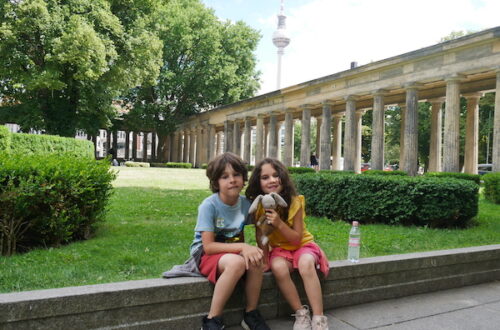
Museum Island is a UNESCO World Heritage Site and one of the great cultural destinations in Europe.
My favourite museums here is the Pergamon Museum which is unfortunately closed for renovations at present (see below), but even without it, Museum island is worth it – the Neue and Alte Museums are wonderful.
Need to know:
The Pergamon Museum is one of Berlin’s greatest attractions and one I recommend warmly — but it is currently completely closed for renovation and will not reopen until June 4, 2027, when the North Wing (including the famous Pergamon Altar) is expected to reopen. Some sections, including the Ishtar Gate, are not scheduled to reopen until 2037.
If you are visiting Berlin before mid-2027, the Pergamon is not accessible. The other four museums on Museum Island remain open, and Museum Island as a whole is still absolutely worth visiting — but plan around the Pergamon being unavailable for now.
Check the Museum Island website for current opening information before your trip.
Checkpoint Charlie
Checkpoint Charlie, the former crossing point between East and West Berlin, is now undeniably touristy — souvenir shops, selfie opportunities, and a reproduction checkpoint booth — but it remains historically significant and worth a short stop.
Go prepared: tell the children about it beforehand, use the information panels, and try to visit outside the busiest midday hours for a more meaningful experience.

Lego Discovery Centre
For a pure children’s afternoon, the Lego Discovery Centre near Potsdamer Platz is excellent — particularly for children aged roughly 3–12. Multiple building stations, interactive attractions, a miniature reconstruction of Berlin in Lego bricks (complete with a falling wall!), and various rides and play areas. My daughter’s highlight was a Ninjago infrared alarm room; my son spent most of his time building racing cars.
Get your Lego Discovery Centre tickets in advance here.

Rainy Day Activities in Berlin for Kids
Berlin is well set up for rainy days in the city and within easy reach. For instance:
- Museum Island — the museums mentioned above may not be ‘for’ kids but work well as a rainy day escape
- Tropical Island Resort — reliably popular with children of all ages
- Lego Discovery Centre — already mentioned above; ideal rainy day activity
- Hurricane Factory Berlin — an indoor wind tunnel experience for older, adrenaline-seeking children
- JUMP House Berlin — a large indoor trampoline park
Playgrounds Near Berlin Main Attractions
If you need a playground break mid-sightseeing, here are some well-located options:
- Spielplatz Monbijoupark — close to Museum Island
- Spielplatz Tiergartenstrasse — near the Tiergarten area
- Spielplatz Berlin Tiergarten, John-Foster-Dulles-Allee — also near Tiergarten
- Spielplatz Auf dem Helmholtzplatz, Raumerstraße 8-9 — in the Prenzlauer Berg area
Where to Eat in Berlin with Kids
Berlin restaurants are almost universally family-friendly: this is genuinely not something you need to worry about in the way you might in some other European cities.
High chairs are standard, children are welcome, and there is always something on the menu that works for kids.
Some specifically child-focused options worth knowing about:
- Family Café Blume — a café with a play space
- Kinderkafee Spielzimmer — a children’s café with a play room
- Luise Dahlem — a large, relaxed restaurant with good outdoor space, popular with families
For everyday meals, Berlin’s street food scene is excellent and very family-friendly: currywurst, pretzels, and döner kebab are all reliably popular with children and available everywhere.
Best Time to Visit Berlin with Kids
Berlin is a very seasonal city and the timing of your visit genuinely matters.
Early summer (June to early July) and September are, in my experience, the best times to visit with children. The weather is warm without being excessive, festivals and open-air events are happening, and the parks and outdoor attractions are at their best.
Christmas can be magical — Berlin’s Christmas markets are genuinely beautiful — but come prepared for serious cold and dress the children accordingly!
Spring and autumn are unpredictable weather-wise, but autumn in particular brings stunning foliage and much quieter streets. If you want a more local experience with fewer crowds, October is a good choice — just have a solid list of indoor options ready for grey days.
July and August can be very hot by Berlin standards (30°C+), the city fills with tourists, and queues at major attractions are at their longest. Manageable, but not ideal with young children.
What to Pack for Berlin
You can find our complete packing list for a family city break in Europe here. For Berlin specifically, a few things worth noting:
- Comfortable walking shoes are non-negotiable — you will cover a lot of ground
- A light layer for evenings even in summer, and air-conditioned museums
- A rain jacket — Berlin summer can bring sudden showers
- The Berlin Welcome Card if you plan to use transport frequently — get it in advance here
You might also enjoy:


