Family Summer Packing List for Greece: What to Pack for a Greek Vacation with Kids
Family packing list for Greece in summer: what to pack for Greece in summer with kids plus essential tips for clever packing when visiting Athens and going island hopping in Greece.
Our family trip to Greece has been one of our most successful vacations to date.
We spent a wonderful summer in Greece, driving, swimming, exploring and while we knew the country would be stunning and welcoming, it truly surpassed our expectations: all the good things we expected from Greece came true, plus some!
A success that meant we now love returning to Greece and have many tips to share! Today, I share my tips for packing and my family packing list for Greece in summer, based on what we actually used and what we have learnt along the way.
Because Greece has some surprises even for the savvy packer!
People arrive expecting intense, suffocating heat — and yes, it is genuinely hot — but what they don’t expect is the wind. The famous Aegean breeze is one of Greece’s great gifts, and it makes even the hottest days significantly more bearable than the thermometer suggests. It also means you need to pack slightly differently than you might assume.
The other thing Greece will teach you quickly is that ‘smooth terrain’ is a generous description of most of it.
Whether you’re in Athens, wandering a Cycladic village, exploring Olympia or hopping between islands, the ground beneath your feet is likely to be uneven, rocky, or steeply stepped. Shoes matter here more than almost anywhere else in Europe.
I’ve put together this packing list with both of these things front of mind: practical, light, and genuinely suited to how Greece actually feels to travel through with a family.
A Note on the Heat — and the Wind
Greece in summer is hot. July and August regularly hit 35°C+ on the islands and in Athens. But the Meltemi wind — the seasonal northerly that sweeps across the Aegean — makes a remarkable difference. On the islands especially, you’ll often find that a breezy terrace feels perfectly comfortable even at the height of summer.
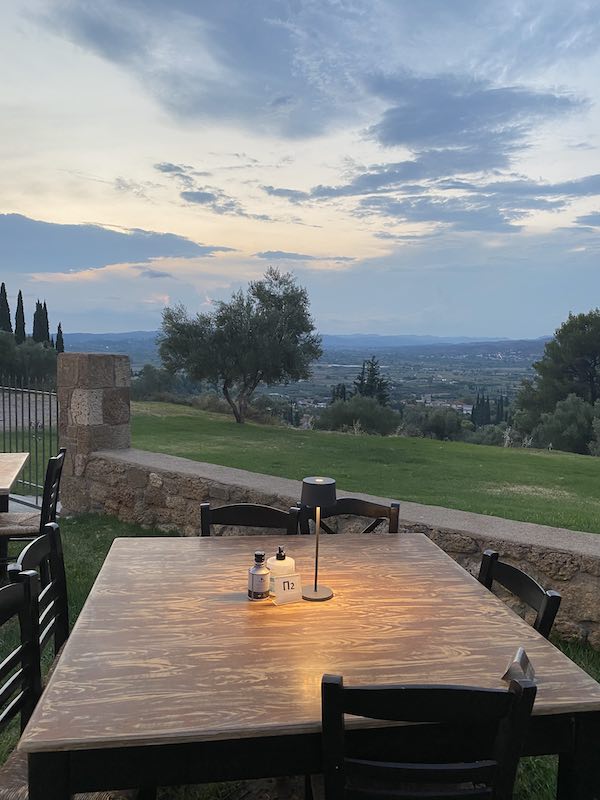
This does mean two things for packing:
- Lightweight layers are still useful, even in peak summer. An evening breeze on a ferry or a hilltop can feel cooler than you expect and a light layer to protect your sun sensitised skin will feel like a blessing.
- Secure your hats. A sun hat without a chin strap or a way to attach it to your bag will be in the sea before lunchtime!
A Note on Island Hopping
If you’re planning to island hop, one of the great joys of Greece: pack light. Really light.
You will be carrying your bags on and off ferries, up and down stairs, along cobbled paths to your accommodation. There are rarely porters, lifts are not guaranteed, and the charm of a whitewashed village fades quickly when you’re dragging a 25kg suitcase up a stepped alley in 35°C heat.
For island hopping, I’d strongly recommend a carry-on size bag per adult and a small backpack per child.
You can do laundry — most island accommodation either has a machine or there’s a laundry service nearby — so you genuinely don’t need as much as you think.
Documents & Travel Essentials
- Passports — check expiry dates. Greece requires 6 months’ validity beyond travel dates for non-EU travellers
- Travel insurance (make sure it covers water activities if you’re planning any)
- Of planning on renting a car, check if you need an international driving permit (Likely, unless you have a EU or a UK licence) – if so, make sure you get it before leaving for Europe.
- Booking confirmations: Download them offline as island and mountain villages WiFi is not always reliable
- EHIC / GHIC card if eligible
- Essential medications in original packaging and relevant prescription, if any
- A small travel organiser or zip pouch for documents
Tip: Keep a physical copy of your ferry booking as well as a digital one. Ticket scanning on Greek ferries is not always high-tech and having a printout avoids stress.
Clothing for Greece in Summer
Adults
Greece is wonderfully relaxed about clothing. Nobody is watching what you wear or judging your style and what matters is that you’re comfortable and cool.
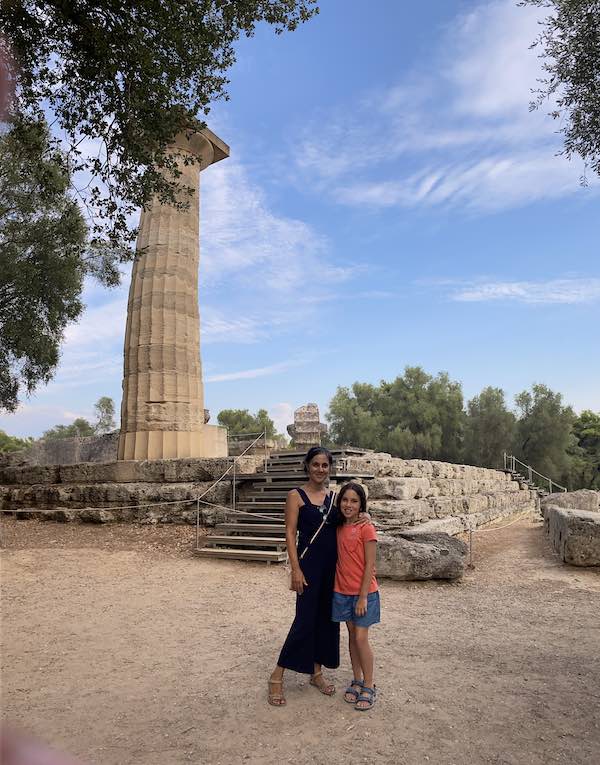
- 3–4 lightweight tops (linen or cotton — breathable is everything here)
- 2–3 bottoms: a mix of shorts, a light skirt or dress, and one pair of light trousers for evenings or visiting churches
- Cover-up or light layer for evenings and ferries — the breeze on a ferry crossing can be genuinely fresh, especially after sunset. A light cotton shirt or thin cardigan earns its place
- 2 sets of swimwear — you will be in the water constantly
- A sarong or light scarf — works as a beach cover-up, a layer, a towel in a pinch, and a modesty cover for churches. One of the most useful items you can pack for Greece
- Sun hat and sun shades
- Sleepwear
- One easy smart-casual outfit if you want a nicer dinner out — but genuinely, Greece is very relaxed. A clean sundress or a linen shirt is more than enough almost everywhere
Church and monastery dress code: Greece has a lot of beautiful churches and monasteries worth visiting. Shoulders and knees need to be covered. Many sites provide wraps at the entrance, but having your own sarong or light trousers means you’re never caught out.
Kids
- 4–5 lightweight t-shirts
- 2–3 shorts or light trousers
- Swimwear (2 sets — essential, they will be in the water every single day)
- UV rash vest — incredibly useful in Greece. The combination of strong sun and reflective water means kids can burn faster than you’d expect. A rash vest dramatically reduces the amount of sun cream reapplication needed
- A thin zip-up or hoodie for ferry crossings and evenings
- Sleepwear
- Sun hat and sun shades

Shoes for Greece — Pay Attention to This Section
I want to spend a moment on shoes because Greece is genuinely different from other European destinations in this respect, and getting it wrong will make everyone miserable.
Greek terrain is rocky, uneven, and often steeply stepped: even in towns and cities, not just on hiking trails.
Athens has ancient pathways worn smooth by centuries of feet (beautiful and slippery). The Cycladic islands have stepped alleys, cobbled lanes, and paths that are essentially boulder scrambles in places. Flip flops are not adequate. Thin-soled sandals are not adequate.

What you need:
- Supportive walking sandals with a proper sole — this is non-negotiable for Greece. Think Teva, Birkenstock, Keen, or similar. They need to grip uneven ground, support your ankle slightly, and be comfortable for hours of walking. This is the single most important item on this list.
- Trainers or walking shoes — for more strenuous days, longer walks, or if you’re visiting sites like the Acropolis where the marble pathways get slippery
- Kids: the same logic applies. Supportive sandals rather than flip flops. Water shoes are also very useful for rocky beach entries, which are common in Greece
On flip flops: They’re fine for the beach and the pool. They are not fine for walking around Greek towns and villages, and the locals know this. If you see a Greek person wearing flip flops in a village, they are probably going to the beach, just line in Italy. Take the hint because if locals do not wear something, there is a good reason!
Accessories & Day Bag
- Sun hat with a way to secure it — chin strap, hat clip, or a bag you can stuff it into quickly when the wind picks up
- Sunglasses — good quality ones; the Greek light is brilliant and intense
- Small crossbody bag or lightweight daypack for days out
- Reusable water bottle — hydration in Greek heat is serious. Tap water is drinkable in most of mainland Greece and many islands, though not all; check locally
- Dry bag or waterproof pouch — if you’re doing any boat trips, ferry crossings, or water activities, a small dry bag for your phone and documents is worth its weight in gold
- Light sarong (already mentioned above but it earns two mentions)
Sun & Heat Essentials
Greece in peak summer is not a gentle sun. It is intense, reflective off the white buildings and the water, and relentless between about 11am and 5pm.
- High SPF sunscreen — bring it from home or buy on arrival (available everywhere, but expensive in tourist areas)
- After-sun
- Lip balm with SPF — the sun and the wind together are hard on lips. This was the one thing I used to skip and learned to regret it: lips will get dry, burnt and if you have any underlying dormant issue, the exposure is likely to make it flare up
- Kids’ SPF 50 sun cream — bring more than you think you need
- Insect repellent — mosquitoes are present in Greece, particularly near water and in the evenings
- After-bite cream
The most important tip for Greece in July and August: Stop between noon and 5pm. Go back to your accommodation, have a long lunch, let the kids rest, stay in the shade with a book or an art conditioned museum. Every local family does this and there is a reason. The sightseeing you do in the early morning and the evening will be infinitely more enjoyable — and the late evenings in Greece are magical, with kids out late, tavernas full of families, and the air finally cool. Lean into the rhythm rather than fighting it.
Toiletries & Health
Greece has excellent pharmacies: Greek pharmacists are knowledgeable and very helpful, and you can find most things you need on arrival. That said:
- Bring prescription medications in original packaging
- Bring Basic pain relief and antihistamines so you have it handy should you need it fast
- Bring any specific children’s medications
- Bring from home motion sickness tablets if any family member is prone — some ferry crossings can be choppy, particularly in the Aegean when the Meltemi is strong. This is worth thinking about seriously if you have children who are sensitive to movement
- Bring Plasters and a small first aid kit
- Bring from home all your personal items: toothbrush, deodorant, tweezers etc. Of course, you can buy all here should you leave them at home too
On seasickness: The Meltemi wind that makes Greece so pleasantly cool can also make certain ferry crossings genuinely rough, particularly in July and August. If you are island hopping and anyone in your family gets seasick, bring medication and consider booking alternative options for longer stretches, for instance a flight from Athens to get to a jump off point allowing for shorter sailing times.
Tech & Travel Gear
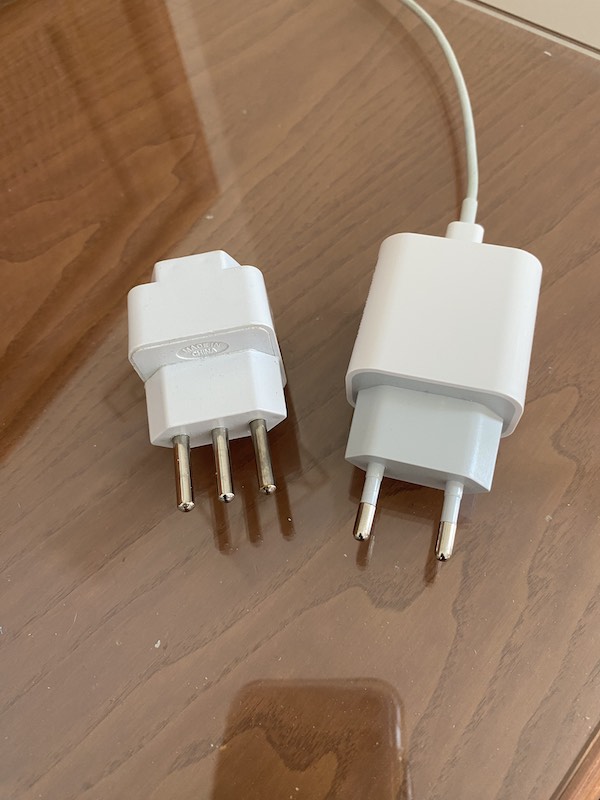
- EU plug adapter if travelling from the UK or further afield (Greece uses the standard European 2-pin plug)
- Portable charger — essential on long sightseeing and beach days
- Phone with offline maps — island and mountain areas mean WiFi can be patchy
- Underwater camera or waterproof phone case: the water in Greece is so clear and beautiful that having one, even of a cheap kind, is really lovely!
- Entertainment for kids on the flight, if using personal screens
Packing for Babies & Toddlers
- Lightweight travel stroller and carrier. Many Greek island paths are not stroller-friendly but it is great to have the option to have your child secure and not on you all the time. A good carrier is often more practical but heat can make it uncomfortable so it is good to have both to mix and match depending on the day / specific excursion.
- UV sun tent for the beach: annoying to carry potentially but makes a big difference on the beach as many are not equipped with sun beds
- UV rash vest and swim nappy
- Portable fan for the buggy or carrier
- Nappies for the journey plus spares — available on most islands but brands and sizes vary
- Familiar snacks from home, if you have a child who may get fussy with new flavors and textures.
What NOT to Pack for Greece
- A heavy suitcase if island hopping — you will regret it deeply. A soft-sided bag you can carry is worth every compromise
- Flip flops as your main shoe — beach only, please
- Too many “just in case” outfits — laundry facilities exist everywhere and Greece is not a dressy destination
- A hairdryer — most accommodation provides one; worth checking before you pack it
- Thick towels — beach towels are provided by most hotels and sunbed hire usually includes one. A lightweight microfibre travel towel is useful for day trips and ferry days
Final Tips
Book ferries early. In peak season, popular routes between islands sell out so if you are hoping to visit Santorini or Mykonos, booking ahead is best
Embrace the evening. Some of the best family moments in Greece happen after 8pm — dinner on a terrace, kids playing in the village square, a walk along the harbour. Pack light enough that you feel relaxed and free, and you’ll have the holiday you came for.
You might also enjoy:
Family Packing List for Greece — pin this!